What Window Replacement Involves in Sacramento
Replacing a window means removing the old sash and frame (or just the sash and glass, in an insert job), setting a new factory-built unit, sealing it against water and air, and finishing the trim. In the Sacramento region that work also has to clear two local hurdles: the state energy code, which sets how much heat the new glass may let through, and a building permit with a final inspection.
Most homeowners who call about replacement windows are dealing with one of four problems: rooms that bake on summer afternoons, glass that has fogged between the panes, sliders that stick or no longer lock, or traffic noise. The right fix differs for each, which is why a measure and a written quote from a licensed installer comes before any product choice.
Choosing a Frame Material
The frame decides upkeep, look and much of the price. National installed-cost ranges from Fixr, per window:
| Frame | Installed, per window | Good to know |
|---|---|---|
| Vinyl | $350–$800 | No painting; the most common replacement frame and the widest size range |
| Fiberglass | $400–$1,500 | Stiff, stable frame that takes dark exterior colors well |
| Wood | $600–$2,000 | Warm interior look for older homes; needs paint or stain on exposed faces |
| Composite | $300–$2,500 | Wood-fiber and polymer blends; varies a lot by manufacturer |
| Aluminum | $200–$800 | Slim and cheap, but metal frames conduct heat |
For most stucco ranch and tract homes, vinyl replacement windows are the default because they fit retrofit openings cleanly and never need paint. Fiberglass and wood make sense when you want narrow sightlines, a dark color or a period look.
Glass Ratings and the 2026 Energy Code
California's 2025 Building Energy Efficiency Standards (Title 24, Part 6) took effect January 1, 2026. For replacement windows in climate zone 12, which includes Sacramento, Elk Grove, Davis and West Sacramento, and in climate zone 11 (Roseville and Rocklin), the prescriptive limits are the same:
- U-factor 0.27 or lower. U-factor measures heat flow through the whole window; lower keeps more heat in or out.
- SHGC 0.23 or lower. Solar heat gain coefficient measures how much sunlight turns into heat indoors; lower blocks more.
- Small-job exception: a replacement of 75 sq ft of window or less may use U-factor 0.40 and SHGC 0.35.
- Repairs: new glass in an existing sash, or a new sash in an existing frame, counts as a repair if it performs at least as well as the original.
Both numbers appear on the NFRC label stuck to every new window, and that temporary label has to stay on until the inspector signs off. Low-e coated dual-pane glass is how manufacturers hit these targets. The full explainer is on energy-efficient windows.
Valley Heat, Sun and the Delta Breeze
NOAA's climate normals put Sacramento's average July high at 93.8°F, and 2024 set a record with 45 days at 100°F or above. Heat waves usually break within two or three days when the cool southwest delta breeze returns through the Carquinez Strait, mostly at night.
That pattern shapes window choices. The hard load is afternoon sun on west- and south-facing glass, which is exactly what a low SHGC addresses. Windows that open well matter too: on breezy evenings, a casement or a wide slider lets you flush heat out of the house before bed. Winters are mild but not trivial, so the low U-factor still earns its keep from December to February.
Retrofit or Full-Frame Replacement?
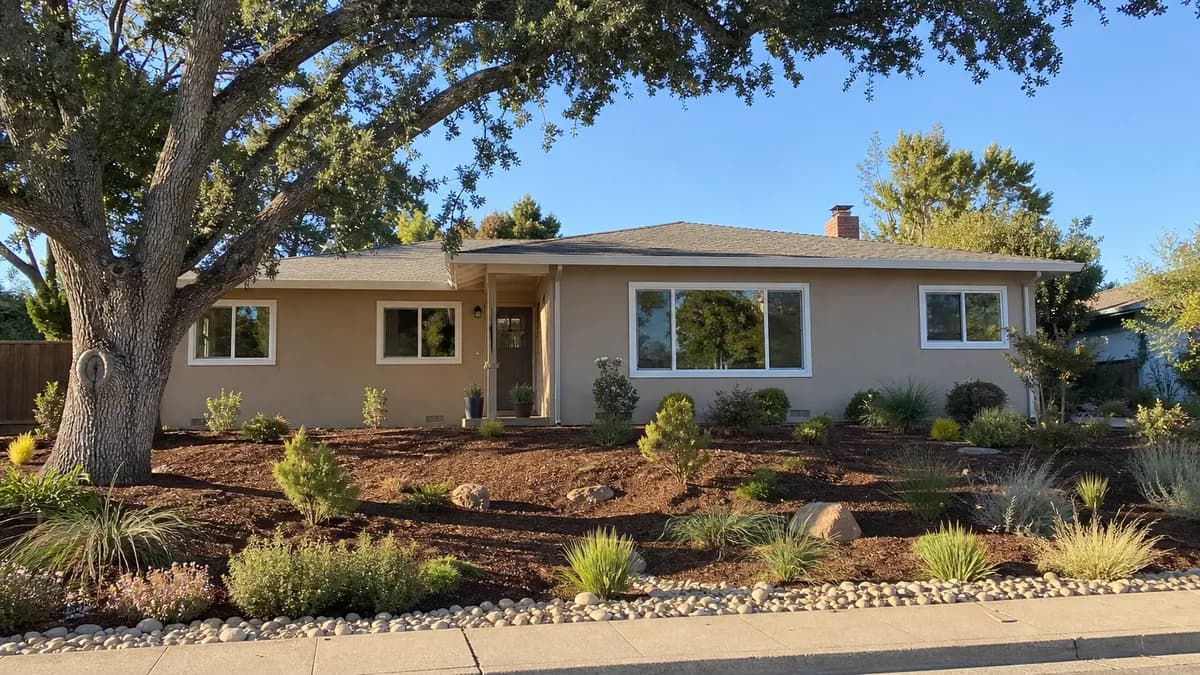
Most Sacramento homes have stucco walls, and that drives the method. A retrofit (insert) window slides into the existing frame or uses a flange that covers the old frame on the outside, so the stucco stays intact. A full-frame replacement removes everything down to the rough opening, which lets the installer fix rot and flashing but means patching stucco or siding.
Calculator-site estimates put full-frame work at roughly 1.5 to 2 times the cost of an insert. Treat those as rough; your installer should explain which method suits each opening and why.