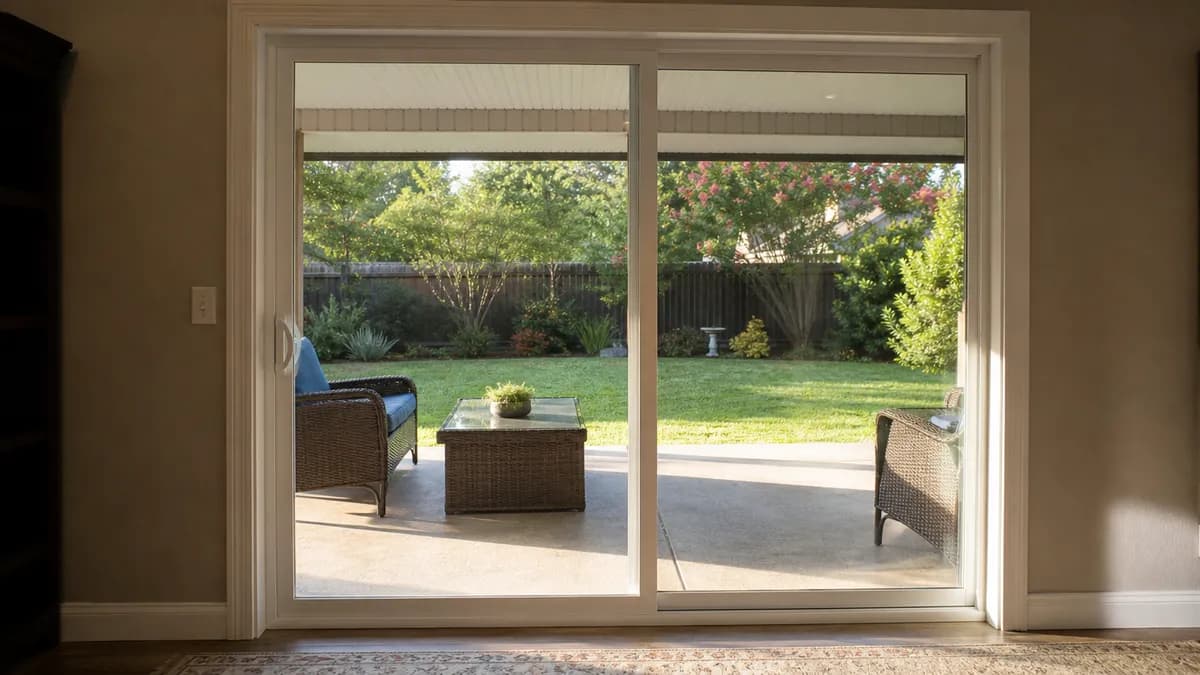
Repair or replace the door?
Plenty of slider complaints are fixable without a new door. A panel that drags or jumps the track often needs new rollers and a cleaned track. A latch that won't catch can usually be adjusted or swapped. Foggy glass between the panes means the sealed unit failed, and the glass alone can sometimes be replaced (see window glass replacement).
Replacement makes more sense when the frame itself is the problem:
- The frame is bent, corroded or pulling away from the wall.
- The door is single-pane, so the glass alone can't be upgraded to modern performance.
- Air and dust leak around the panels even after new weatherstripping.
- The sill has rotted or water gets under the door in winter storms.
- You want a different style, such as a French slider or a wider opening.
Safety glass is required in every sliding door
Building codes treat glass in sliding, swinging and bifold doors as a hazardous location, so it has to be safety glazing. In the model residential code this is section R308.4.1. In practice that means tempered glass (or laminated safety glass) in both panels. Any new slider sold for residential use is built this way, and the safety glazing is marked on the glass.
The same rules reach a little past the door. Glass within 24 inches of a door with its bottom edge below 60 inches also needs safety glazing, so a fixed window right beside the slider may need to be tempered too. If you're replacing nearby windows at the same time, ask the installer to check them.
Title 24 energy rules apply to glazed doors
California's energy code counts a sliding glass door as fenestration, the same category as windows. A replacement door has to meet the same U-factor and solar heat gain limits a replacement window does. Under the 2025 Title 24 standards, in force since January 1, 2026, the prescriptive limits for Climate Zones 11 and 12 (which cover the Sacramento area) are:
| Rating | Standard limit (CZ11 and CZ12) | Small jobs, 75 sq ft or less of glass |
|---|---|---|
| U-factor (heat loss) | 0.27 or lower | 0.40 or lower |
| SHGC (solar heat gain) | 0.23 or lower | 0.35 or lower |
A single door swap can fall under the 75 sq ft small-job allowance, but if you're replacing windows at the same time the total area counts. Ask the installer which limits apply to your job, and check the ratings on the door's NFRC label. A low SHGC matters on a slider that faces west or south, where hot summer afternoons put direct sun on a large sheet of glass. For more on ratings, see energy-efficient windows.
There is no federal tax credit for doors installed after December 31, 2025, and SMUD does not currently list a window or door rebate on its Home Performance Program page.
Sliding glass door replacement cost
These are national ranges from published cost guides. No Sacramento-specific price data was found, so treat them as a starting point, not a quote.
| Door type | Typical national range, installed |
|---|---|
| Sliding glass door replacement, overall | $1,000–$7,500 (about $2,510 on average) |
| Double-pane vinyl slider | $1,500–$3,000 |
| Double-pane aluminum slider | $2,000–$4,000 |
| Double-pane wood slider | $2,500–$5,000 |
| Double-pane fiberglass slider | $3,000–$6,000 |
| Glass only, standard double-pane panel | $150–$400 per panel |
What moves the price: frame material, door width and panel count, whether the old frame comes out cleanly or the opening needs repair, interior and exterior trim, and upgrades like built-in blinds or a higher-security lock. For a wider look at pricing, see window replacement cost in Sacramento.
Frame materials for a patio slider
Vinyl
The most common replacement choice and usually the lowest cost. Vinyl frames don't need painting. Very wide vinyl doors can feel less rigid than other materials, so look at panel weight and roller quality on large openings.
Fiberglass and composite
Stiffer than vinyl and stable through temperature swings, which helps a big door keep sliding smoothly. Fiberglass costs more. See fiberglass windows for how the material behaves.
Wood and aluminum
Wood looks warm inside but needs finish upkeep on the exterior, especially on a door that takes afternoon sun. Aluminum allows thin frames, but an aluminum door still has to meet the 0.27 U-factor limit, so it needs a thermally broken frame and high-performance glass.
French sliders and other alternatives
A French slider (sometimes called a French-style sliding door) has wider stiles and rails, so it looks like a pair of French doors but still opens by sliding. It suits older or traditional homes where a thin-frame slider looks out of place, and it keeps the space-saving operation.
Hinged French doors swing open and give a full-width opening when both leaves open, but they need clear floor space for the swing. Multi-panel stacking or pocket doors open a much wider span and cost far more, often with framing changes. If the opening size or framing changes, expect a more involved permit review than a same-size swap.
Permits and choosing an installer
Sacramento County has required a permit to replace windows and doors in unincorporated areas since January 1, 2010, including retrofit work. For other cities, check with the local building division; most Sacramento-area jurisdictions require a permit for this kind of replacement. The installer typically pulls it.
Door replacement falls under the C-17 Glazing classification, and a B General Building contractor may do it as part of a larger job. Verify any license at cslb.ca.gov before you sign. For the full process, read our guide to window installation, or start from window replacement in Sacramento.
Main guide: window replacement in Sacramento.